
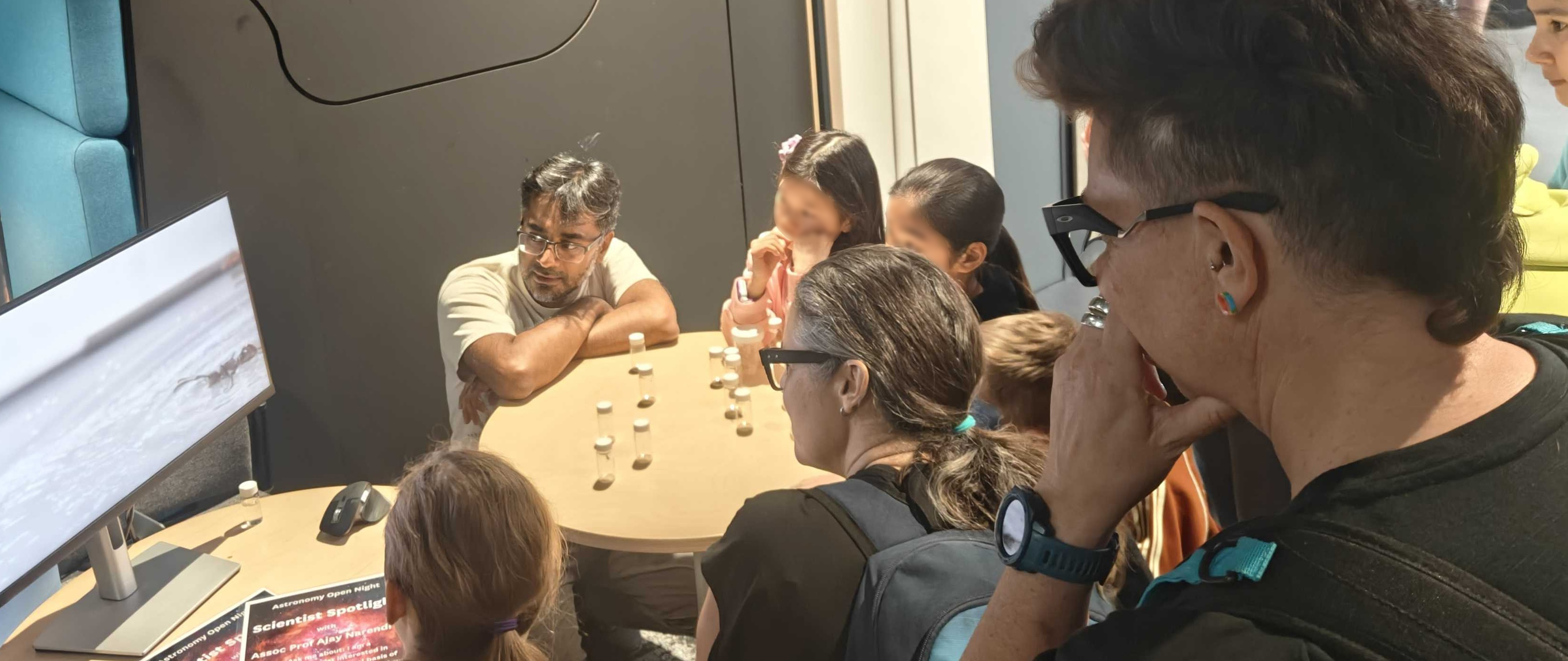
Research
I am fascinated by how animals make sense of space. The research we carry out in my group investigates the cognitive and neural mechanisms underlying spatial learning and memory, with a particular focus on how environmental information is acquired, retained, and translated into efficient navigation. Because survival depends on reaching critical resources, navigation provides a powerful framework for linking cognition, behaviour, and neurobiology.
My work centres on Australian invertebrates that live in diverse and often extreme environments, including Central Australian deserts, intertidal zones in Queensland, the rainforests of Cape York, urban landscapes, and dim-light habitats. To study navigation behaviours of animal in their natural contexts, I have developed a range of innovative tools and analytical techniques to reconstruct their fine-scale movement with high precision.
My research has largely focussed on insects and spiders where I take advantage of the inter- and intra-specific variation in size and tasks that animals carry out in discrete ecological and temporal niches.
A second aspect of my research aims to promote native insect pollinators and develop methods and techniques to control pests and diseases of native insects.
Outreach
I regularly interact with and take school students and general public out on nature walks to show and talk about insects and spiders. Covered in ABC, Friends of Mt Majura,
I have a keen interest in capturing the behaviours of tiny critters and enjoy experimenting with macro-photography and videography when time permits. Check out some of my pictures and videos.
Scientific Career
- 2026. Professor, School of Natural Sciences, Macquarie University, Sydney
- 2025. Co-Director, Macquarie University Pollinator Futures Research Centre.
- 2023. Associate Professor, School of Natural Sciences, Macquarie University, Sydney
- 2015. ARC Future Fellow, Department of Biological Sciences, Macquarie University, Sydney
- 2012. ARC Fellow (DECRA), Research School of Biological Sciences, Australian National University, Canberra
- 2009. ARC Fellow (APD), Research School of Biological Sciences, Australian National University, Canberra
- 2006. Postdoctoral Fellow, ARC Centre of Excellence in Vision Science, Research School of Biological Sciences, Australian National University, Canberra
Education
- 2007. Ph.D. Biological Sciences, Macquarie University, Sydney, Australia
- 2002. M.Sc. Remote Sensing and Cartography, Madurai Kamaraj University, Madurai, India
- 2000. B.Sc. Hons, St Joseph’s College of Arts & Science, Bangalore University, Bangalore, India
Recent Grants
- 2025. Discovery Project Grant, Australian Research Council (with Marie Herberstein, Ximena Nelson, Dinesh Rao)
- 2023. Discovery Project Grant, Australian Research Council.
- 2022. Hort Innovation Australia (with Fleur Ponton, Théotime Colin, Sasha Tetu)
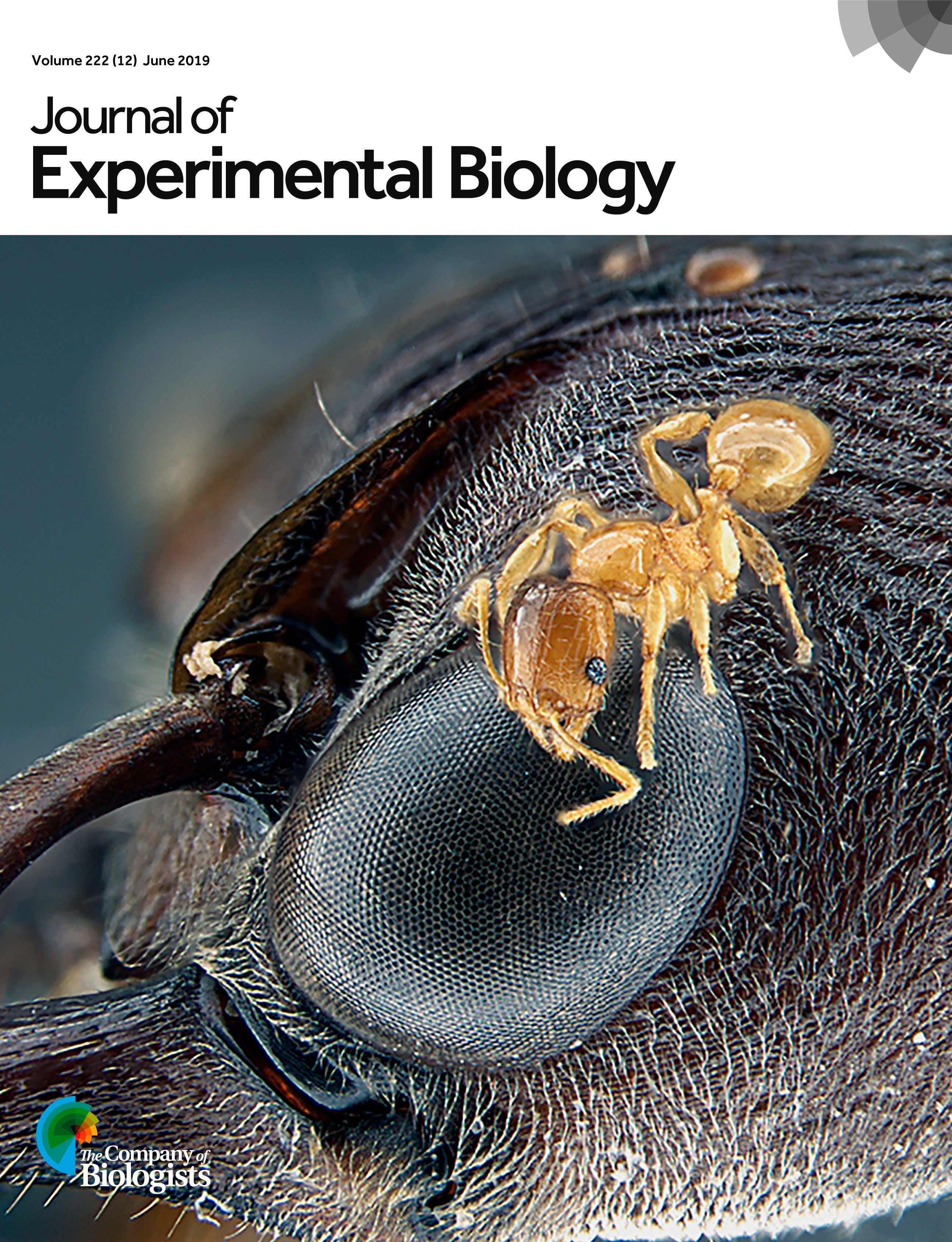
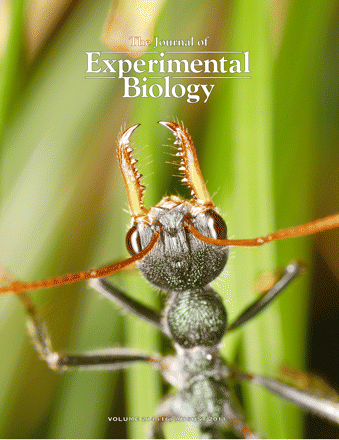
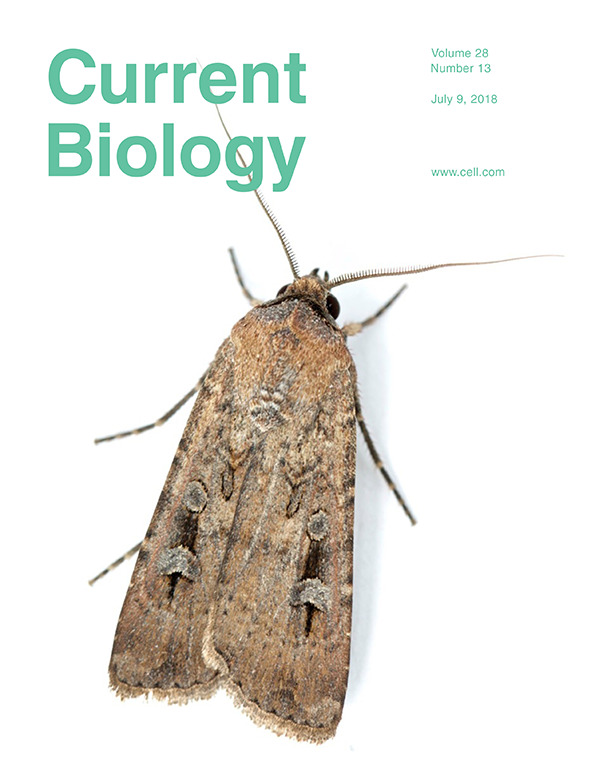
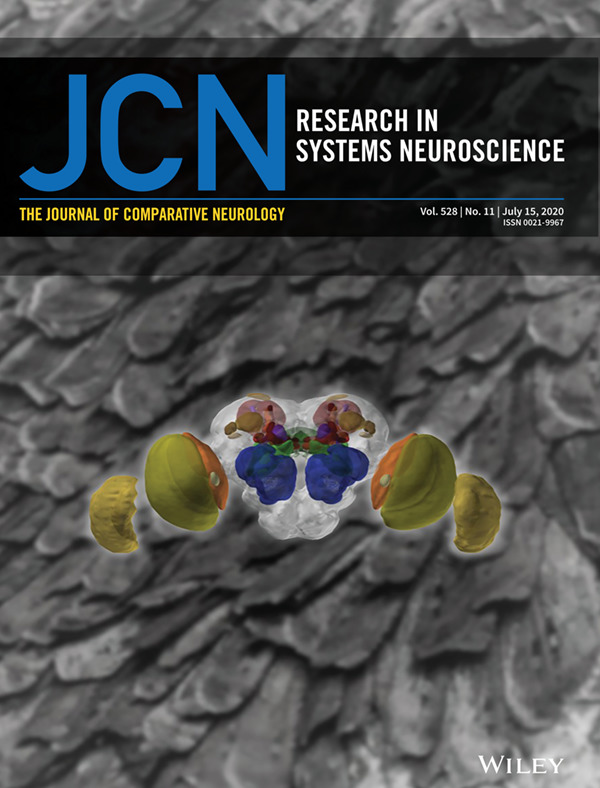
Cover Images
Selected Publications (complete list here)
- Narendra A, Seibel A, Ramirez-Esquivel F, Joshi P, McLean DJ, Robledo-Ospina LE, Rao D. 2025. Sexual dimorphism in jump kinematics and choreography in peacock spiders. Journal of Experimental Biology 228: jeb249416. [pdf] [Conversation] [ECR Spotlight: Anna Seibel] [video 1] [video 2]
- Freas CA, Narendra A, Murray T, Cheng K. 2024. Polarised moonlight guides nocturnal bull ants home. eLife 13: RP97615. [link]
- Aceves-Aparicio A, Narendra A, McLean DJ Lowe EC, Christian M, Wolff JO, Schneider JM, Herberstein ME. 2022. Fast acrobatic manoeuvres enable arboreal spiders to hunt dangerous prey. Proceedings of National Academy of Sciences 119: e2205942119. See Video 1; Video 2.
- Ogawa Y, Narendra A and Hemmi JM. 2022. Nocturnal Myrmecia ants have faster temporal resolution at low light levels but lower adaptability compared to diurnal relatives. iScience 25: 104134 [pdf]
- Pisokas I, Rössler W, Webb B, Zeil J & Narendra A. 2022. Anaesthesia disrupts distance, but not direction, of path integration memory. Current Biology 32: 445-452. [in Conversation]
- Kamhi JF, Barron AB and Narendra A. 2020. Vertical lobes of the mushroom bodies are essential for view-based navigation in Australian Myrmecia ants. Current Biology 30: 3432-3437 https://doi.org/10.1016/j.cub.2020.06.030
- Sheehan ZBV, Kamhi JF, Seid MA, Narendra A. 2019. Differential investment in brain regions for a diurnal and nocturnal lifestyle in Australian Myrmecia ants. Journal of Comparative Neurology 527: 1261-1277.
- Heinze S, Narendra A and Cheung A. 2018. Principles of insect path integration. Current Biology 28: 1043-1058. (link)
- Narendra A & Ribi WA. 2017. Ocellar structure is driven by the mode of locomotion and activity time in Myrmecia ants. Journal of Experimental Biology 220: 4383-4390.
- Narendra A & Ramirez-Esquivel F. 2017. Subtle changes in the landmark panorama disrupts visual navigation in a nocturnal bull ant. Philosophical Transactions of the Royal Society B 372: 20160068.
- Narendra A, Greiner B, Ribi WA & Zeil J. 2016. Light and dark adaptation mechanisms in the compound eyes of Myrmecia ants that occupy discrete temporal niches. Journal of Experimental Biology 219, 2435-2442.
- Narendra A, Gourmaud S & Zeil J. 2013. Mapping the navigational knowledge of individually foraging ants, Myrmecia croslandi. Proceedings of the Royal Society B 208: 20130683.
- Narendra A, Reid SF, Greiner B, Peters RA, Hemmi JM, Ribi WA & Zeil J. 2011. Caste-specific visual adaptations to distinct daily activity schedules in Australian Myrmecia ants. Proceedings of the Royal Society B 278: 1141-1149
 Ecological Neuroscience Group